
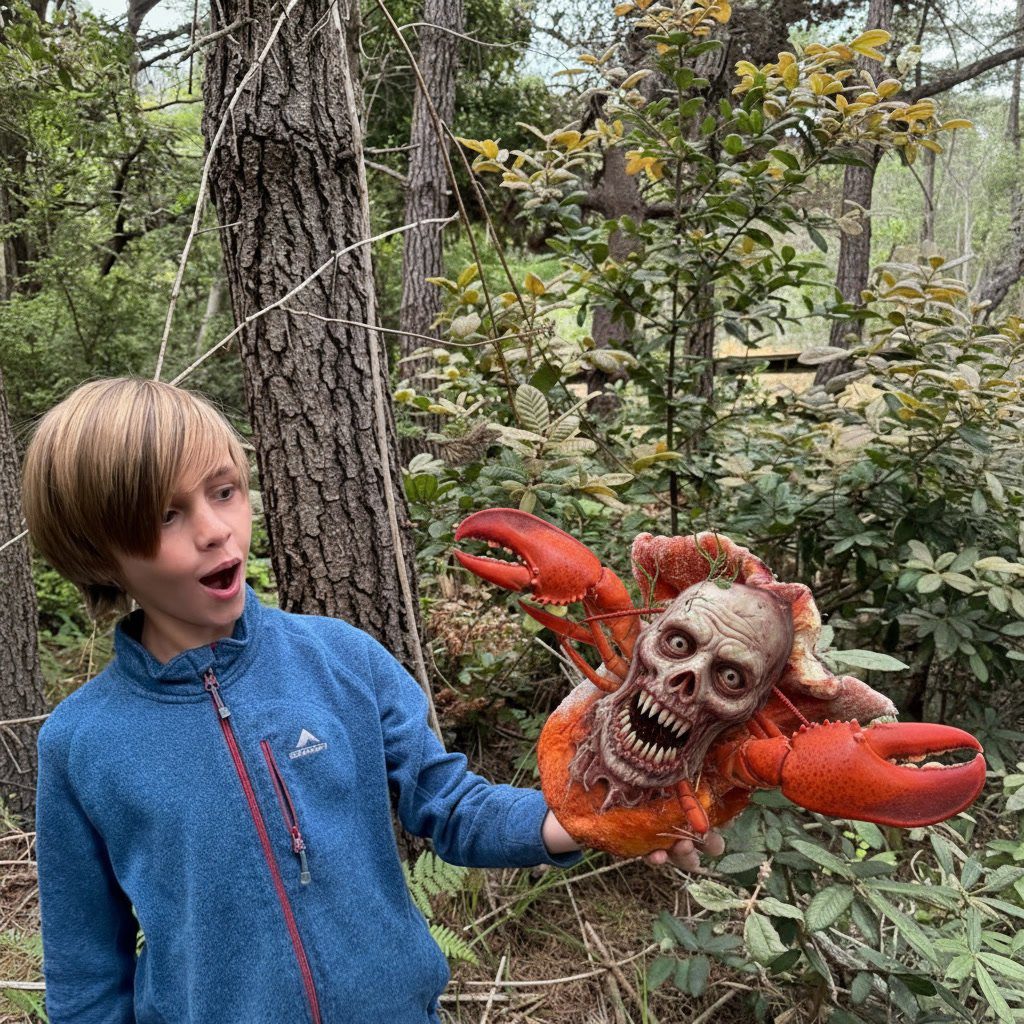
Somewhere out in our trees right now there’s a mushroom having the worst week of its life, and it’s going to be delicious.
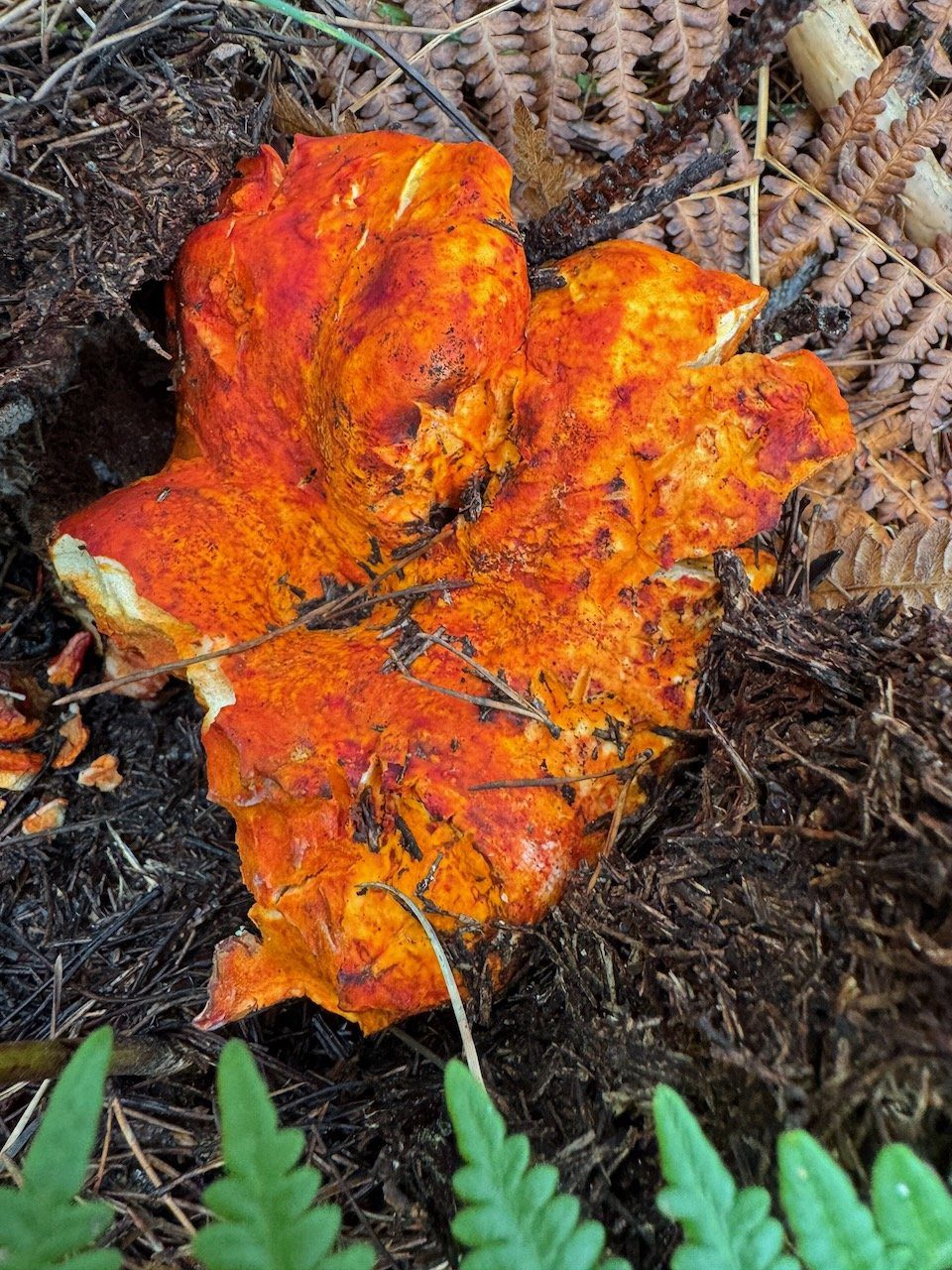
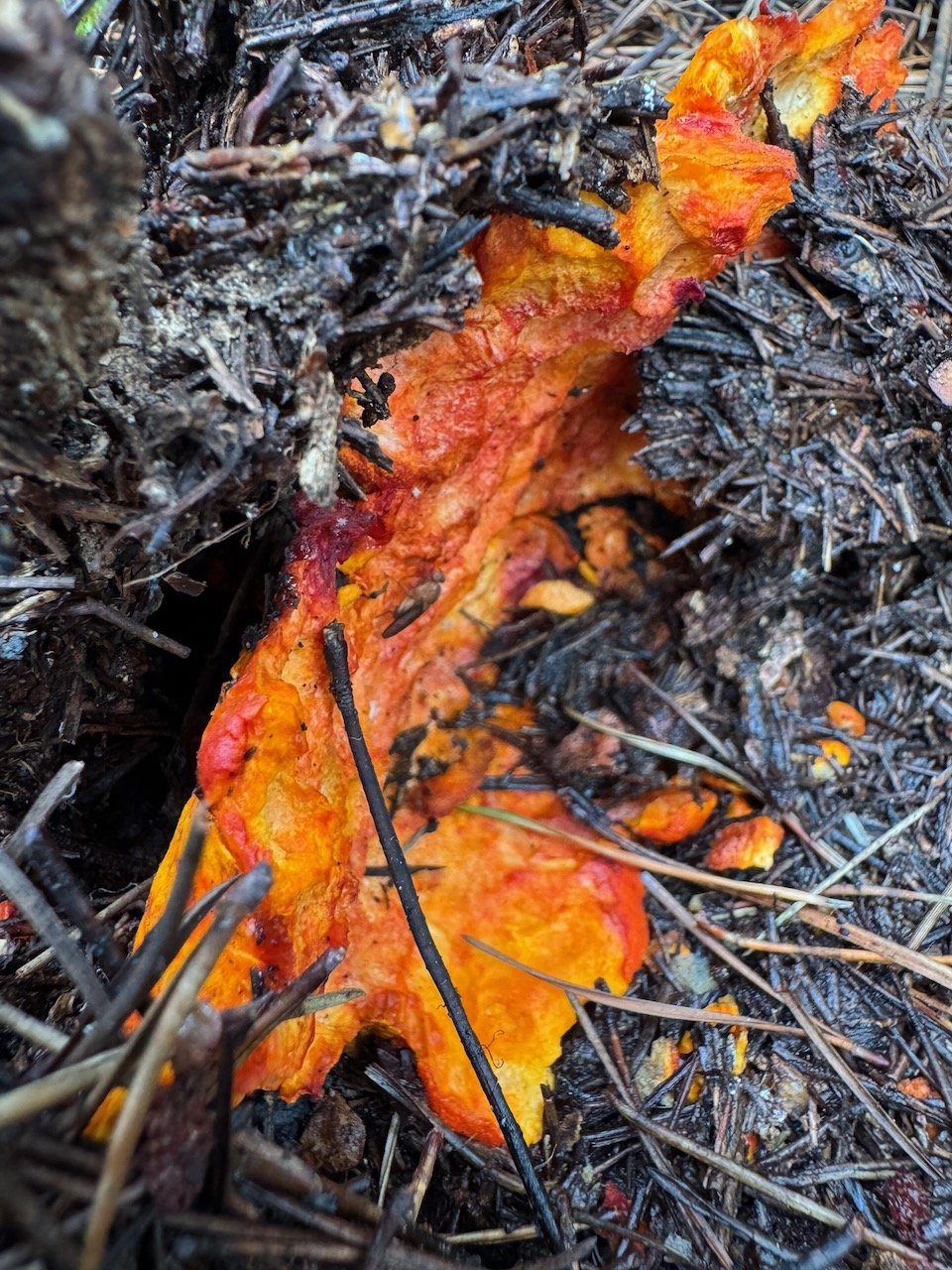
Walk a coastal forest a week or two after the first real rains and sooner or later something orange stops you dead. It’s the color of a boiled lobster shell, bright enough to catch your eye from ten feet off, and it’s usually only half out of the ground, shouldering the needles and the moss up around itself. Brush the duff back and what comes up hardly looks like a mushroom at all, because it’s a hard orange crust with no gills you’d recognize and a shape that went wrong somewhere early on. It looks like something that washed up rather than something that grew.
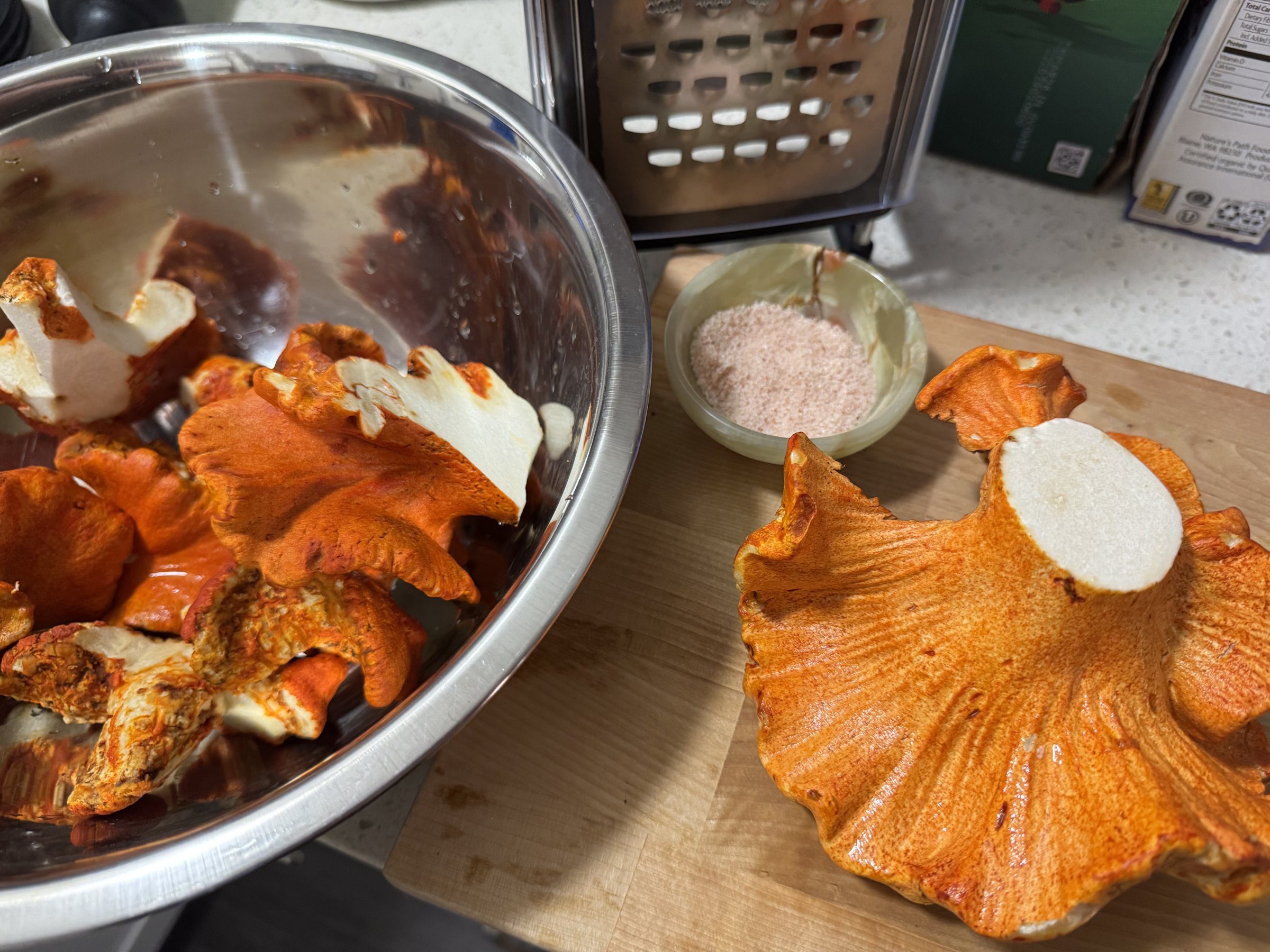
Everything about it says don’t eat me. The color reads as a warning label, the shape reads as a practical joke, and the texture sits somewhere between a cauliflower and a road cone. Hand one to somebody who’s never seen one before and you’ll get a face out of them, every time. Then you take it home, cut it into pieces and fry it in butter with a bit of salt, and it turns out to be one of the best things these woods produce all year.
What you’re holding is two organisms wearing one body. A lobster mushroom is an ordinary mushroom that’s been hijacked, hollowed out and repainted by something else, and the something else is the part you eat. Zombie is a literal description.
The thing in charge
The orange is a fungus called Hypomyces lactifluorum, and it doesn’t make mushrooms at all. It belongs to the Hypocreaceae, which is a family mostly made up of molds, so this is a mold with ambitions. Its spores land on a mushroom, the threads work in, and from then on the two of them grow together with the orange fungus in charge.
Lewis David von Schweinitz described it in 1822 from material collected in North Carolina and filed it under Sphaeria, and the Tulasne brothers moved it into Hypomyces in 1860, where it’s stayed ever since as the type species of the genus. The name comes from the Latin for milk flowing, after the milk caps it turns up on.
So “lobster mushroom” is a cook’s name for a partnership, and not a very equal one: the orange crust is the parasite, and the firm white flesh under it started out as somebody else.
The mushroom underneath
On this coast the host is almost always a russula, and usually Russula brevipes, the short-stemmed russula, which is a big squat chalk white mushroom with crowded gills and a stem too short for its cap, and it comes up in coastal forest soil in late fall, sometimes in real abundance. Hypomyces lactifluorum takes milk caps too, Lactarius and Lactifluus, including Lactarius deceptivus and the peppery Lactifluus piperatus group, and it works right through North America from Canada down into Mexico. The one under our orange out here is very likely Russula brevipes as well, though nobody’s cut one and proved it, and that’s the trouble with lobsters: the parasite hides whatever it took.
Russula brevipes, left alone, is nothing much. Field guides call it edible and mediocre, it’s bland, it can carry a peppery bite, and nobody drives anywhere for it. Take that same mushroom, let a mold eat it from the outside in, and it comes out as one of the best wild mushrooms on this coast, and one people pay real money for. The russula gets nothing whatsoever out of the arrangement.
How the takeover works
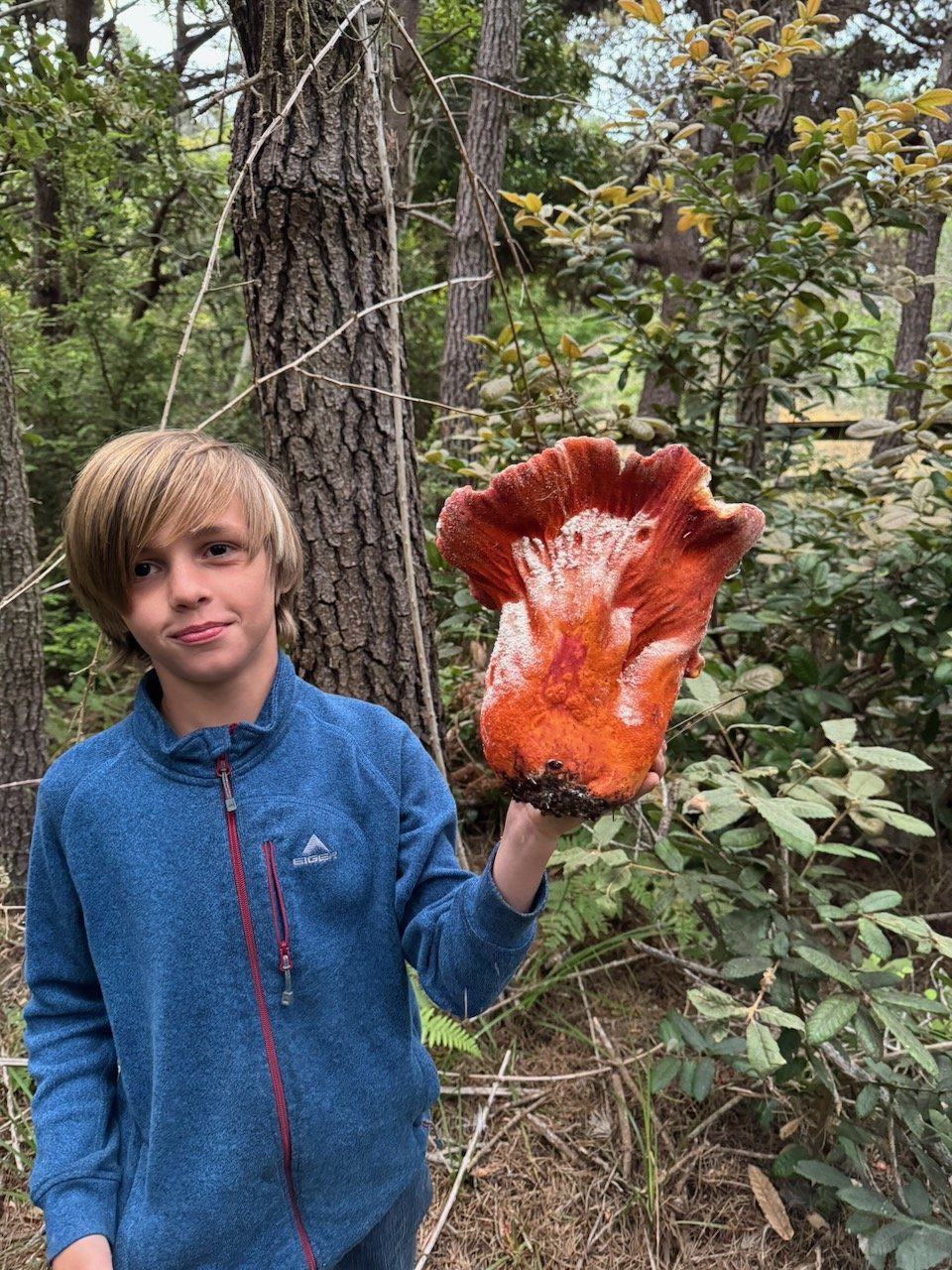
Nobody’s entirely settled when the infection starts. One line of work has the spores landing on the gills of a very young host, and another has the two of them meeting underground, mycelium to mycelium, before anything’s come up at all. What isn’t in doubt is how early it happens, because the shape tells you. An infected host never gets to finish. The cap stays lumpy and closed in, the stem comes out short and thick, and the gills never open into gills, which leaves the whole thing looking like a mushroom that got interrupted partway through getting dressed. They stop at blunt ridges and folds, and on an older one they’ve gone under the crust altogether.
Run a thumb over the surface and it feels pimpled, almost like sandpaper with grit too large for it. Those bumps are the parasite’s own fruiting bodies, called perithecia, and each one is a tiny flask sunk into the crust with its neck at the surface. When they ripen they fire spores out of those necks, spindle shaped and warted and pinched in the middle into two cells. So the host is sterilized as well as deformed, which means the only spores leaving that mushroom now belong to the thing that ate it.
Which makes the lobster the zombie of the mushroom world. The body’s still there, still standing up in the duff, still shaped roughly like the mushroom it set out to be, and it’s walking around the forest running errands for the thing that took it over. It doesn’t shuffle or moan, in fairness, but the rest of it checks out. What comes out the far end is a transformed freak, and no two of them are the same shape. A good number are barely recognizable as ever having been a mushroom, so part of the fun of finding one is that you’ve no idea what you’re about to pull out of the ground.
There’s a bit of chemistry that goes with all this too, for anyone who ever puts one under a lens. A drop of potassium hydroxide on the orange crust turns it dark purple almost instantly, and it’ll still do it on a specimen that’s been sitting in a herbarium for decades. Young crust is yellow orange to orange, and with age it blotches magenta and purple on its own.
What the parasite does to the flavor
This got properly investigated only recently. A team at the University of Quebec at Trois-Rivieres took lobster mushrooms apart, looked for whose DNA was in there, and found that the flesh is overwhelmingly parasite, with only traces of Russula brevipes left. So the mushroom you’re carrying home is mostly the mold, wearing the russula’s shape.
Then they looked at the chemistry, and the parasite had rewritten it. The terpenes that a healthy Russula brevipes makes, which are the defensive compounds that carry its bitterness and its bite, were simply gone from the infected ones. Their reading is that the bitter compounds get converted into other, better tasting ones on the way through, which makes the lobster a different food altogether, built out of a russula by something that had no interest in feeding you at all.
The texture goes the same way. Where a russula is brittle and crumbly, a lobster is dense and firm, and it holds together in a hot pan in a way that very few wild mushrooms manage.
Knowing one when you see it
Lobsters are the easy end of mushroom identification, and it’s the weirdness that makes them easy. The color’s unmistakable, the pimpled crust is unmistakable, and nothing else in these woods is this orange and this ugly at the same time, so what you’re checking for isn’t which species it is, but whether this one’s worth eating.
A good one is bright orange, firm all the way through when you cut it, and white inside. The smell’s faint and mushroomy, or faintly of shellfish, which is where the name gets its second life.
Leave the ones that have gone over. Purple and blotchy through the crust, soft anywhere, or a strong fishy smell all mean the same thing, which is that this one’s been sitting in the ground too long and the bugs have found it before you did. Lobsters are tough and they linger, so a patch will happily hold a week’s worth of specimens ranging from perfect to compost. Cut them rather than pulling them, and cut them in half on the spot, because whatever’s going on inside will be obvious and you won’t carry home anything you have to throw away.
They have to be cooked, like nearly every wild mushroom worth eating. And while lobsters have been eaten across North America for as long as anybody’s been writing it down, a small number of people do get an upset stomach from them, so the sensible rule with any wild mushroom you haven’t eaten before applies: a small portion, well cooked, on its own.
The question everybody asks
If the lobster’s a parasite wearing a host, and the host is hidden under the crust, what happens if the host was something poisonous?
The field guides raise it themselves. In principle the parasite could take a toxic mushroom and you wouldn’t be able to see what it had taken, so the hypothetical is real. But in practice it goes for a narrow set of hosts, the russulas and the milk caps, none of the usual ones is dangerous, and there’s no record of anybody being poisoned this way in the couple of centuries people have been eating them. Nobody’s proved it can’t happen, and most experienced foragers on this coast are content with the two centuries.
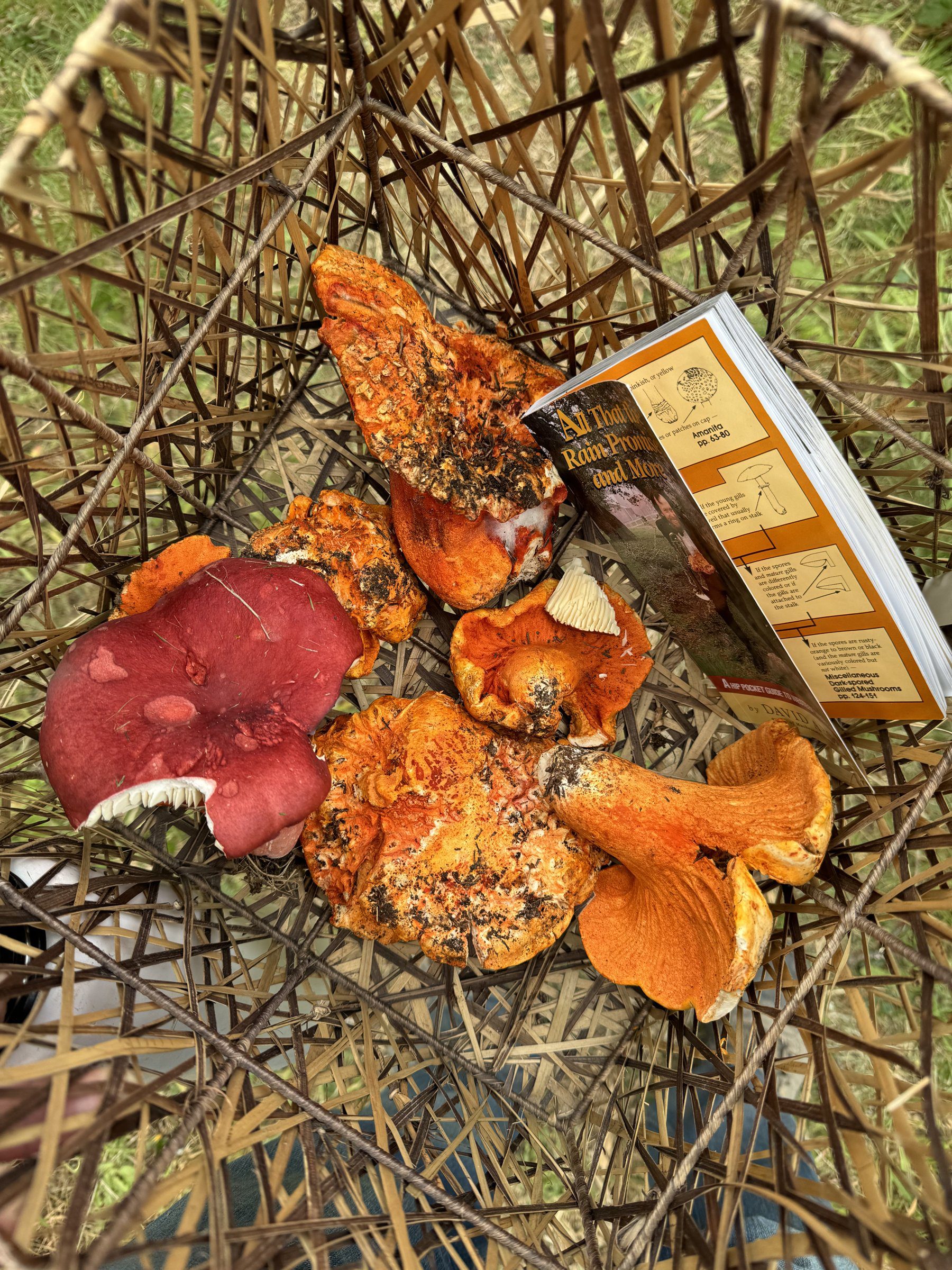
There’s a red hot russula in the basket photo further up. Russula is a big genus and it holds plenty you wouldn’t want on your plate, and that one grows here and isn’t edible. It just isn’t one of the mushrooms the lobster goes after.
When they come up on the Mendocino Coast
Lobsters run a long season at camp, because they start showing up in August and they keep coming until around February, which is half the year. The literature has them arriving shortly after the fall rains in north coastal California, with the host at its most common in late fall, so a run that opens in high summer and is still going in late winter is a generous stretch of ground to work with. They’re out in force while the candy caps are still weeks away, and they’re still going when the candy caps finish.
Rain runs the whole show. A study in eastern Canada that followed lobsters through three seasons found production tracking precipitation closely, with dry years thin, and it found them favoring the edges: trail sides, small gaps in the canopy, and the places where light reaches the ground. That matches how they turn up here, because you’ll find them along the edge of a path more often than deep in the closed forest, so a slow walk with your eyes down is a real search technique, and a lovely way to spend an hour.
Lobsters are commercially picked in the Pacific Northwest and in Quebec, they show up in grocery stores in Oregon, and they’re sold in markets in Mexico, where they’ve been eaten and named locally for generations. This coast is simply a very good place to run into one.
Cooking them
Don’t treat a lobster the way you’d treat a candy cap. The candy cap is a flavoring, used dried and in small amounts, like vanilla. The lobster is a vegetable: you cook it in pieces and you eat it.
The firm flesh is the whole gift, because it takes high heat without collapsing, it browns properly, and it comes out with a mild, slightly shellfish note that’s launched a thousand chowders. Butter, a hot pan, salt, and not much else is a fine first go. After that it’s good in cream, good with fish, good in a risotto, and very good in anything where you’d otherwise want crab, because the color and the flavor both lean that way and the texture doesn’t fall apart on you. The color holds through cooking too, so a pan of lobster mushrooms is the best looking thing you’ll cook all week.
Cut the pieces bigger than you think, because a generous chunk of lobster keeps its bite in a way that a thin slice won’t.
At Camp Candy Cap
We’ve got lobsters on the property, and they’re common enough that one of the campsites is named for them. Lobster is its own round meadow beside Candy Cap Meadow, it’s the most private spot at camp, and the mushrooms that gave it its name come up nearby.
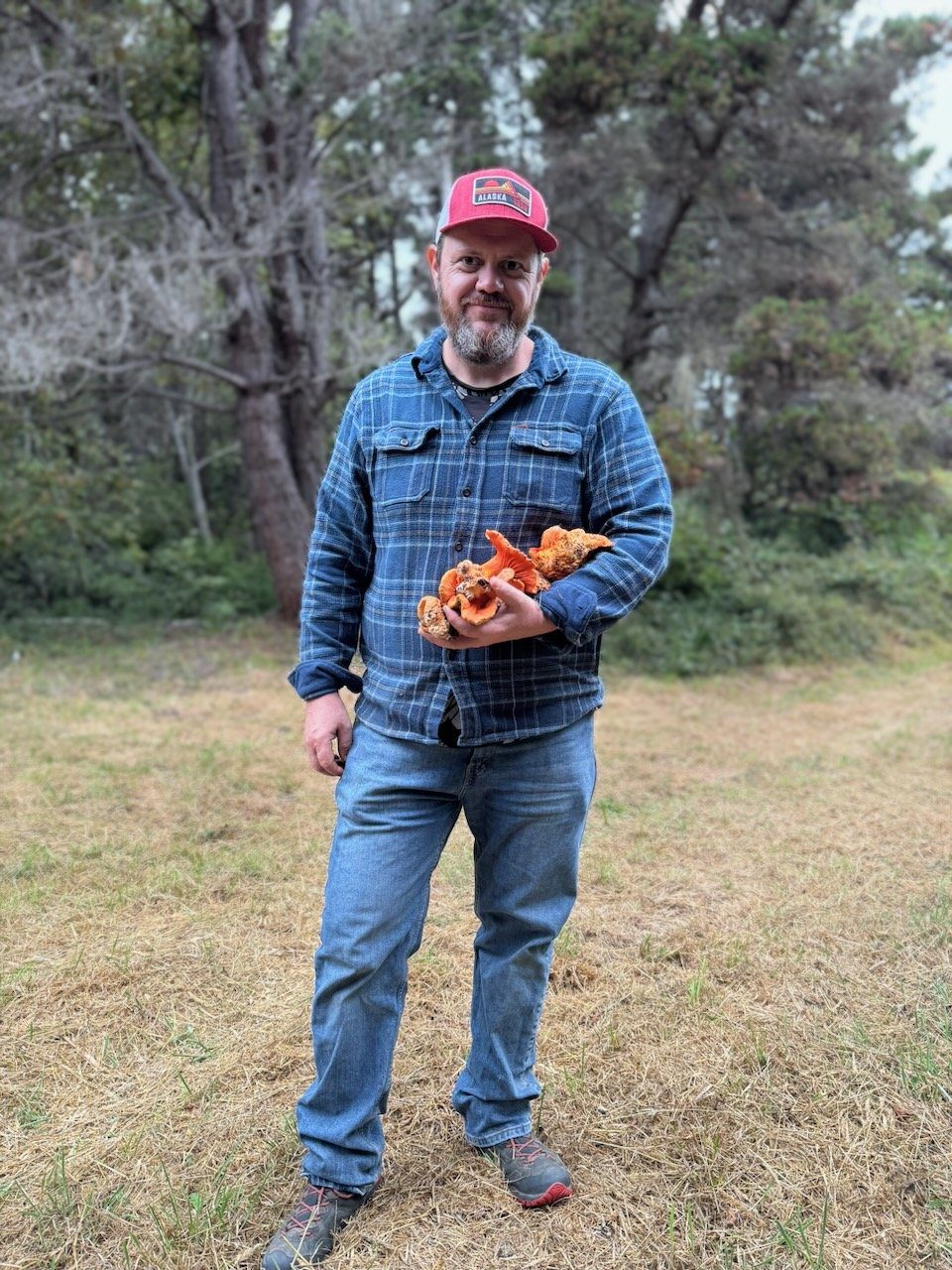
They’re not hard to find here once you know the orange. Every campsite is named for a mushroom that grows at it, and the forest floor goes to work the moment the rains come: candy cap, lobster, reishi, hedgehog, black elfin saddle, porcini, yellowfoot chanterelle, and a long tail of things that need a better mycologist than me to name. Twelve acres of coastal pine and tanoak, wet and mossy and quiet from November on, makes a very good classroom.
A word about picking. The twelve acres are for learning to see, and we don’t forage them, because a camp that gets picked over in August has nothing to show anybody in February. So the lobsters here stay where they come up, and you get to crouch down in the duff with one, turn the needles back and look at the strangest thing on the property with your own eyes. If you want to fill a basket then the coast is the place, and that’s a different day out with its own rules and its own license.
Come and find one
Local folks who know this coast teach here through the season, and the mushroom days run while the ground’s producing. Spend half a day out with somebody who knows where to look and you’ll come back able to find them yourself, and you can stay the night at camp on either side of it and make a weekend of it.
Nobody expects you to show up knowing anything.
Camp Candy Cap sits on twelve acres of coastal forest in Fort Bragg, California. You can see the guided days we run over on the Experiences page.
Camp Candy Cap is a Wilderfolk property on the Mendocino Coast, with camping through the year and guided days out with local folks who know this coast.
Please note: this article is informational and isn’t a guide to identification. Learn from a qualified expert and a regional field guide, and never eat a wild mushroom you haven’t positively identified.